

What we do
Our Strategic Process
TrueToAfrica believes in the cause of empowering African children by enhancing their educational conditions and opportunities. With the support of our local strategic partner, C2Y, we do this through our program services for vulnerable children and orphans in Uganda: education sponsorship, humanitarian care, and school development.
100% of TrueToAfrica’s operations are facilitated primarily by volunteers, which allows your donations to go directly to the program you choose to support. We invite you to learn about our programs, processes, and impact and then consider how you and your family can help!

Our Program Services
Education Sponsorship, Humanitarian Care, School Development

Try to imagine what your life opportunities would have been if you had not had access to your education. This is the reality that many vulnerable and orphaned children in Uganda currently face. In Uganda, the economy and government are unable to support publicly funded schooling for most of their children. Consequently, parents or guardians must personally pay school fees in cash for their children to attend school.
Yet, a key challenge for parents and guardians in rural villages is that most are illiterate subsistence farmers, which means that they live off the land, growing their own food, with no other sources of income. Even if they do have a small income, the cost of sending one child to school can often absorb half or more of the household income. In addition, these families are often large with many children and extended family members living within the same household.
Many parents and guardians also have health challenges, such as HIV/AIDS, which makes tending their gardens difficult, let alone seeking and holding outside work. When a parent is too sick, dies, or is absent, the children are sent to live with a close family member, usually an aunt or elderly grandmother. These aunts and grandmothers often raise and care for many children in their small homes with no outside resources. Grandmothers have the added challenge of poor health. In these situations, they cannot afford to send one child to school, let alone a household of children.
Without small cash income for school fees, a child will be denied access to the school. But when a parent or guardian is able to send a few coins with a child to the school for a partial fee payment, this funding is enough to allow the child to attend school for a week or so. When more fees are due, if parents or guardians are able, they send the child with a small amount for a few more days or else the child will be “chased away” from the school until they can bring more fees. This cycle of insufficient fees results in inconsistent attendance and delays in education, such as repeating grade levels.
Just think what these children could do if they were in school consistently and gaining skills and knowledge! The good news is that you can help by becoming an education sponsor and make access to education a reality for a vulnerable or orphaned child.
TrueToAfrica facilitates educational sponsorship for vulnerable and orphaned children. Our strategic local Ugandan partner, Child2Youth Foundation, works with their social workers, village councils and teachers to identify vulnerable children and orphans in need of education and humanitarian sponsorship. TrueToAfrica seeks sponsors to fund educational sponsorships for these children, manages sending funding for the children, and coordinates communication between sponsors and children through letters and photos.
Sponsorship can begin at any age, and we commit to follow each child as far as their education journey takes them, whether to secondary school, vocational school or university. The children choose career paths that fit their talents and interests!
The TrueToAfrica team visits the children, at school and in their homes, during our annual trips, to build relationships, reinforce the importance of education, and follow their progress. Throughout the year, local social workers care for the children as they deliver humanitarian items, conduct home checks, transport children to the health clinic as needed, help them write letters to their sponsors, and more. In Ugandan culture, anyone who helps provide for a child is considered a parental figure, and the children are always so grateful for the generous support provided by TrueToAfrica sponsors.

Think about how our current living conditions determine and benefit our overall welfare. We live in heated and cooled homes, have regular income, eat a variety of foods from well-stocked grocery stores, and have closets full of clothes we do not even wear. We sleep in comfortable beds with clean sheets and blankets, have access to running water in our homes on demand, and move about freely in our cars to meet our transportation needs.
In rural villages, poor living conditions put children’s welfare at risk. Parents and guardians are very often illiterate subsistence farmers living in small two-room homes made of clay bricks or wooden boards with thatched roofs, situated on small plots of inherited or rented land. For hours a day, if their health allows, they cultivate their gardens which provide the family’s primary source of food. Extra produce may be sold for a small income. If they are able, they may also earn some small income by cultivating other gardens in the village. What little cash they may earn is used for daily needs not provided by the garden, such as salt, oil, soap and charcoal for cooking fires.
Yet, old age and ill health of parents and guardians means they often cannot work, even on their own land. Many of these rural households are large and headed by single mothers or elderly grandmothers, caring for extended family and orphaned grandchildren. These conditions of surviving off their gardens with some small cash means there is simply not enough to also provide clothing, beddings or enough food for the children. Most children sleep on the ground, often without blankets, exposing them to insects, cold nights and, without a net, mosquitos and malaria. Clothing is often handed down even though it is too large or in poor condition. Access to water requires walking long distances and carrying heavy containers back to the home. The staple food, when it can be purchased, is posho (corn grits) which is boiled over a cooking fire into a drinking porridge or a thick hot cereal.
Humanitarian care makes such a difference in a child’s life as well as that of their family. It’s good to know that you can help! As a Humanitarian Sponsor, you will provide basic necessities to a vulnerable child in Uganda and ensure they have regular meals, proper clothing, and a good night’s sleep under a mosquito net. Your care will sustain a child’s academic success, energy for learning, ability to concentrate, and health (by preventing illness that takes them out of school). Humanitarian sponsorship also ensures that children, who are at school and not earning income, are seen as active contributors in their large or needy families as care items also benefit the entire household.
TrueToAfrica aims to provide each sponsored child both an Education and Humanitarian Sponsorship. Yet, when some students do not have Humanitarian Sponsorship, they still need humanitarian care. For this reason, we provide two other humanitarian aid options, even without becoming a sponsor.
You may choose to give to a specific child in immediate need or choose to give care items based on your humanitarian interests, including goats, to be delivered where they are most needed. Goats create income-producing projects for the children and their families while also providing an opportunity for children to learn responsibility by caring for the goat. Providing humanitarian care is a great way to engage in service to others within a timing and scale that is right for you.
During the C2Y social worker’s visits with the children, they note the living conditions and the resources needed for the child and household. TrueToAfrica and C2Y work together to determine the appropriate type, amount and timing of care item deliveries. Social workers use humanitarian sponsorship funding to purchase all care items in local markets, and then they personally deliver the care items to each child.
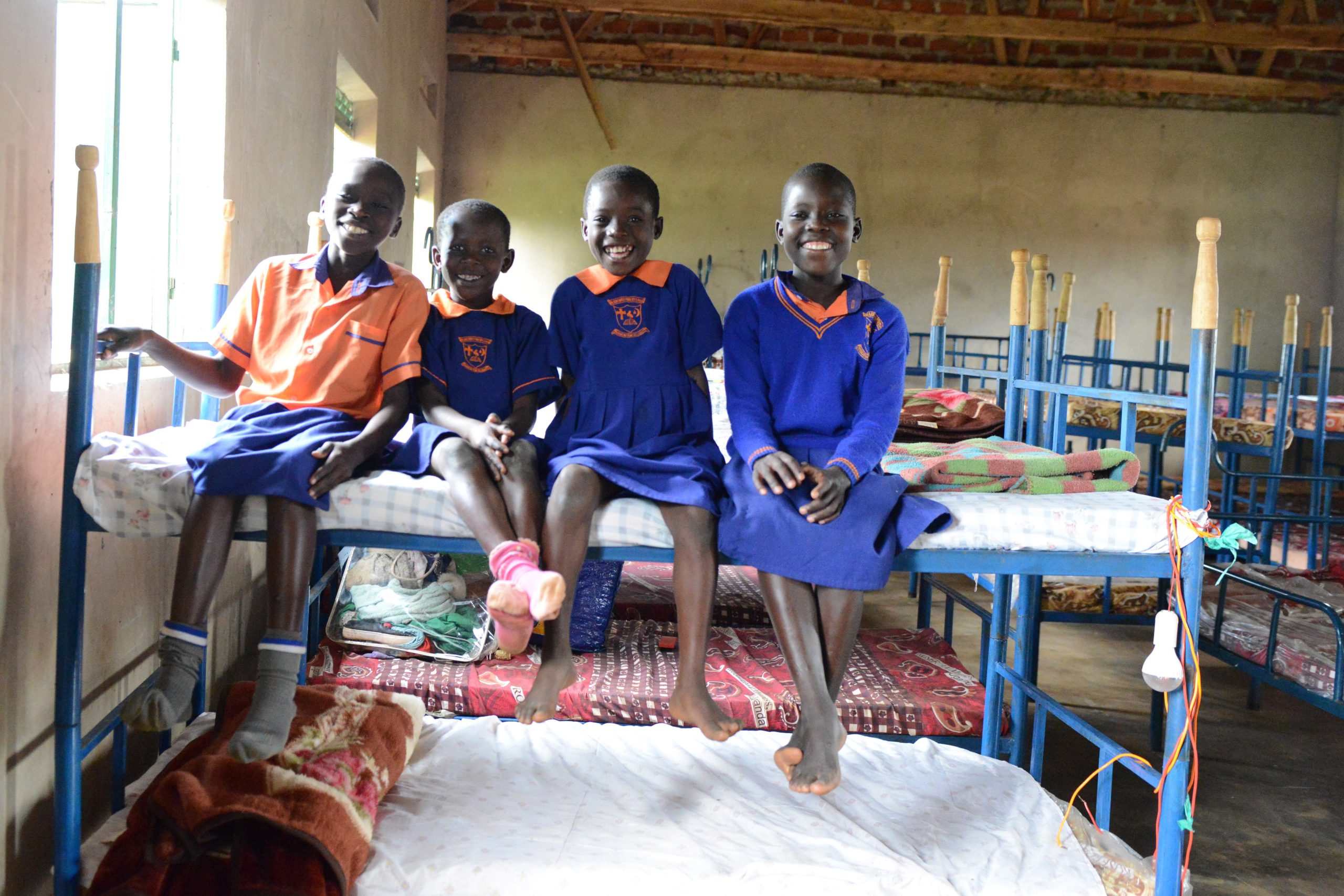
When you think of the schools you attended, you likely think of classrooms with a teacher, chalkboard, desks, books, paper and pens. Try to imagine learning in an outside classroom, sitting on a log under a tree without a desk, book, paper or pencil! Many small rural village schools, trying to serve their communities, start out this way due to very limited resources. Children in these undeveloped schools learn to write by drawing in the dirt. Teachers in these outside classrooms have no chalkboards or very few teaching supplies. They may tack up a poster to a tree or borrow a textbook from another school for day or two to write up lessons.
In the Ugandan education system, schools are dependent on student school fees. They use these fees to pay teachers and develop their educational environments including providing textbooks and supplies for teachers and students, and even build the school structures. Rural village schools have the extra burden of not having enough paying students to pay and keep teachers or create a successful learning environment. Teachers may simply be adults in the village who have no teacher training but know how to read. Schools often require students to bring school supplies to attend class, such as brooms, chalk and paper. Yet, in rural villages, these are the very same students who do not have cash for school fees, let alone for school supplies. Thus, poorly resourced schools in rural villages find themselves in a real quandary as they don’t have resources to attract paying students, and yet without student school fees they cannot obtain needed educational resources.
TrueToAfrica’s mission is to improve learning opportunities and conditions for vulnerable and orphaned children which includes improving their classroom experience. These children are found in rural villages that lack schools or have underdeveloped schools with poor learning environments. Even if these schools have teachers, the schools lack the ability to generate capital for building permanent classrooms (e.g. with bricks and cement) and improving the learning environment.
TrueToAfrica engages in school development projects specifically for community-owned, rural village schools in Uganda. Community-owned schools are owned by the members of the village or group of villages as opposed to private schools that are owned by individuals or organizations. Private ownership requires schools to be profitable, that is, to formally collect enough school fees, whereas community-owned schools have a broader goal of educating their own children, often relying on the village for teachers and other resources. However, this community school strategy usually results in many non-paying local students in very under-developed schools.
You can help support school development in these community-owned, rural village schools with projects that include building permanent structures for classrooms, student dormitories, teachers’ quarters, kitchens and latrines as well as providing passive water systems, doors, windows and cement floors. We also provide classroom resources including desks, chalkboards, teacher supplies, textbooks, pencils, pens, and paper supplies. You can directly improve the education and learning environments in schools for vulnerable and orphaned children.
These donor-funded school development projects are implemented using local labor and supplies from local vendors which, in turn, helps the local economy. You may provide some or all of the funding for a specific school building project or provide critically needed classroom and teacher resources. You may even design your own fundraisers to invite others to help support this needed school development. You will receive photos of your supported school development, such as building projects at various stages of completion, final building projects, children from the school, delivered school supplies and classrooms with new resources. As you engage in school development for community-owned, rural village schools, you also leverage your support and expand your reach to serve all the children in the village for years to come!
get involved
How Can You Help?

Sponsor a Child
Sponsor a full year of education for a vulnerable child or orphan, including school fees, textbooks, school uniform, shoes, daily lunch, health clinic access and care of a social worker.
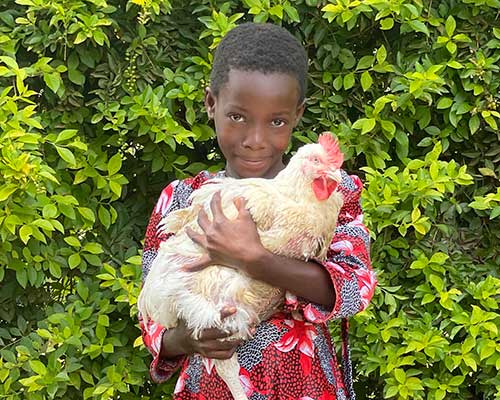
Provide Humanitarian Care
Provide critical humanitarian care items such as mosquito nets, blankets, mattresses, dry beans, posho (grits), clothing, sanitary pads, goats and holiday chicken dinner for children in need.
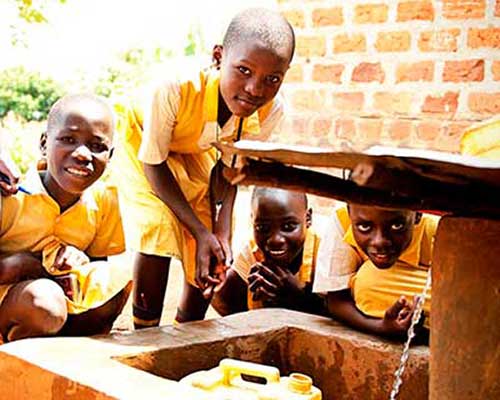
Improve Village Schools
Improve the function and safety of village schools by supporting our school development projects, such as latrines, dormitories, desks, water systems, new classrooms and classroom resources.